Increase Ecommerce Sales: 15 Proven Strategies to Boost Conversions


Imagine spending thousands on ads, posting daily on social media to increase your eCommerce sales, and finally getting lots of visitors to your site, but no one buys.
That’s the leaky bucket problem. You’re bringing people in, but they leave because of things like slow pages, confusing checkout, or lack of trust.
So even though traffic increases, sales don’t. In 2026, the challenge isn’t just getting people to your site; it’s keeping them there. With the average eCommerce conversion rate sitting between 2.5% and 3%, most businesses are losing 97 out of every 100 visitors.
In this guide, we’ll try to fix just that: practical strategies to increase eCommerce sales in 2026.
Key Factors That Influence Your Ecommerce Sales
When it comes to eCommerce, sales usually depend on several things working together. You might have great products, but if people don’t visit your store or the buying process feels complicated, sales will remain low.
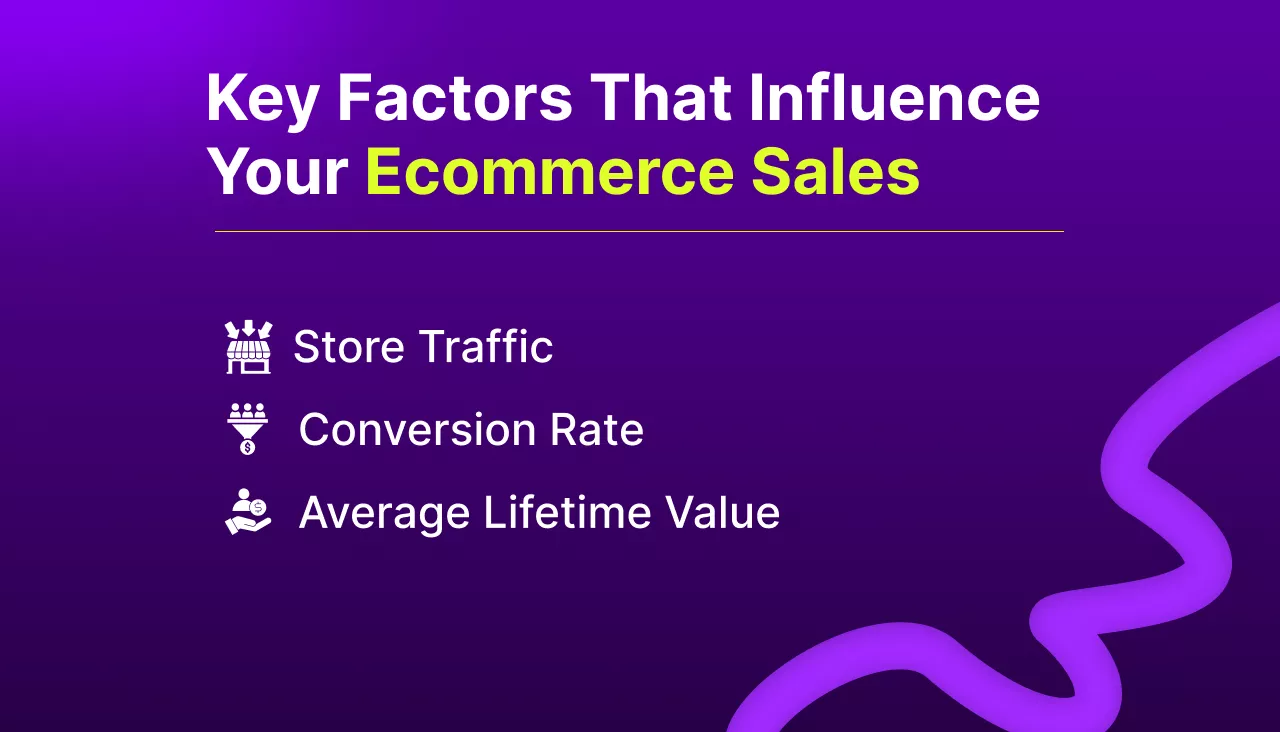
In most cases, eCommerce growth comes down to three key factors:
(i) Store Traffic: Store traffic refers to the number of people visiting your eCommerce website. The more relevant visitors you attract, the more opportunities you create for potential sales. However, traffic quality matters just as much as traffic volume. Visitors who are actively searching for your products are far more likely to convert than random users who land on your store by chance.
(ii) Conversion Rate: Traffic alone doesn’t guarantee revenue. The next important factor is conversion rate, which measures how many visitors actually make a purchase. If 1,000 people visit your store and 30 of them buy something, your conversion rate is 3%. Conversion rates are heavily influenced by the overall shopping experience.
(iii) Average Lifetime Value of a Customer (ALV): The third factor that strongly influences eCommerce sales is Average Lifetime Value (ALV). The total revenue a customer generates for your business over time. Many eCommerce stores focus primarily on acquiring new customers. However, repeat buyers often contribute the largest portion of long-term revenue.
If you want to increase eCommerce sales, improving any of these three areas, traffic, conversion rate, or customer lifetime value, can start delivering noticeable results.
15 Proven Strategies to Increase Ecommerce Sales
Below are proven strategies that successful eCommerce businesses use to attract more visitors, convert them into buyers, and drive long-term revenue growth.
1. Improve Store Speed and Performance
The faster your site loads, the more you sell. It sounds simple, but
A 1-second delay in page load time can result in a 7% reduction in conversions.
– Akamai
In 2026, “fast” means instant. Many WordPress users struggle with slow sites because of bloated databases.
Online shoppers expect websites to load almost instantly. If your product page takes too long to load, visitors may leave before they even have a chance to see what you are selling.
Slow websites also hurt SEO rankings and mobile usability, which makes it harder to acquire new customers.
Key ways to improve eCommerce performance
- Optimize image sizes
- Use a reliable hosting provider
- Reduce heavy plugins and scripts
- Enable caching and CDN services
- Choose a performance-focused eCommerce platform
For WordPress users, store performance often depends on the eCommerce system powering the site. Modern solutions like EasyCommerce, a lightweight AI-powered WordPress eCommerce plugin, focus on faster product loading and simplified store architecture. A streamlined backend and optimized frontend help store owners like you maintain speed even as product catalogs grow.
When customers can browse products quickly without delays, they stay longer on your site and explore more products, which increases the chance of conversion.
2. Simplify Your Store’s Checkout Experience
One of the biggest barriers to eCommerce conversions is a complicated checkout process.
Customers who are ready to buy often abandon their carts simply because the checkout feels too long or confusing. If users are forced to create accounts, fill out too many fields, or go through multiple pages, many will quit before finishing the purchase.
Best practices for checkout optimization
- Offer guest checkout
- Reduce unnecessary form fields
- Use auto-fill for address and contact information
- Display progress indicators
- Support multiple payment methods
- Show shipping costs clearly before checkout
Checkout optimization plays a major role in eCommerce conversion rate optimization because it removes friction during the final step of the buying journey.
Even small improvements, like reducing checkout steps or simplifying form fields, can significantly increase completed purchases.
3. Optimize Product Pages for Decision Making
Your product page is where the customer decides whether to buy or leave.
If the page lacks clear information, visuals, or trust signals, shoppers hesitate. Many eCommerce stores lose potential customers simply because their product pages don’t answer basic questions.
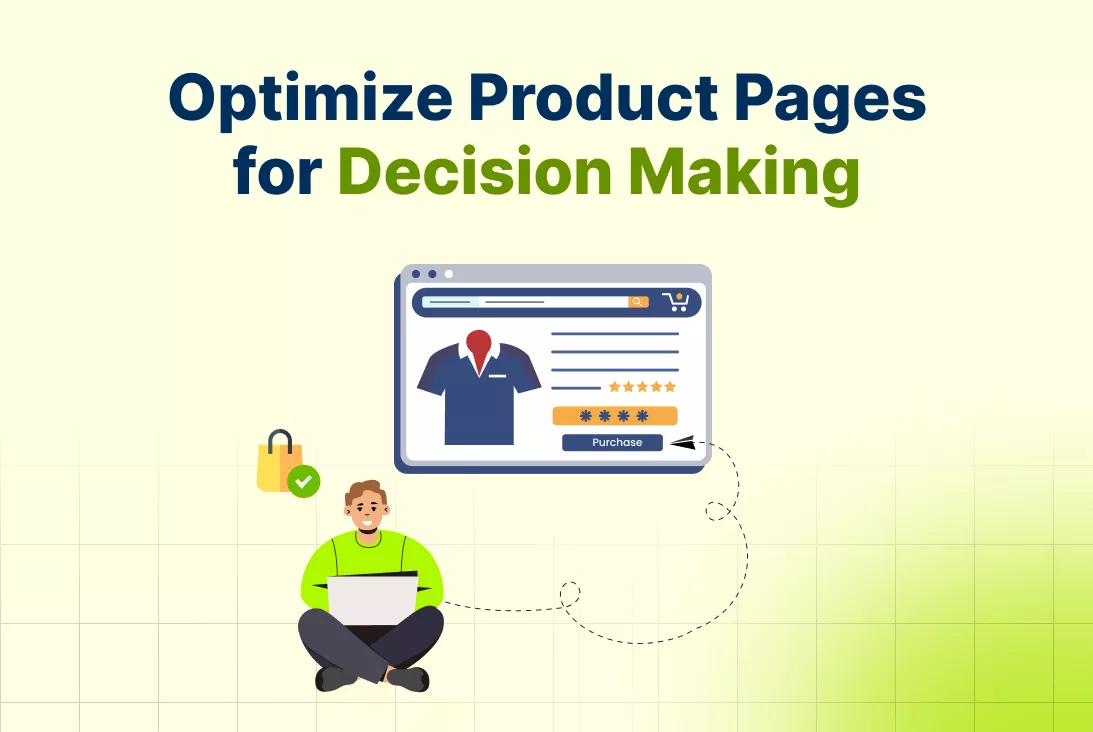
A strong product page should clearly communicate these things:
- What the product is
- Who it is for
- Why is it better than alternatives
- What benefits does it provide
Key elements of high-converting product pages
- High-resolution product images
- Multiple viewing angles
- Product videos or demonstrations
- Clear feature lists
- Benefit-focused descriptions
- Shipping and return details
- Customer reviews
Instead of writing generic descriptions, focus on how the product solves the customer’s problem. Clear and informative product pages reduce hesitation and help visitors feel confident about making a purchase.
4. Master the “Safety Net” of Cart Recovery
Shopping cart abandonment is a reality; about 70.22% of carts are left behind. But an abandoned cart isn’t a “no”; it’s a “not right now.”
There are several reasons why this happens:
- Unexpected shipping costs
- Complicated checkout processes
- Lack of payment options
- Distractions during the purchase process
- Comparing prices on other websites
You need a safety net to catch these customers. Follow these strategies to reduce cart abandonment that eCommerce stores face
- Send automated abandoned cart emails
- Use retargeting ads to remind customers about products
- Offer limited-time discounts for incomplete orders
- Provide transparent shipping costs earlier in the process
- Optimize checkout for mobile devices
Cart recovery campaigns can bring back customers who have already shown interest in buying. Because these shoppers are already familiar with your products, recovering abandoned carts is often one of the easiest ways to increase eCommerce sales.
5. Build Trust Through Reviews and Social Proof
Online shoppers cannot physically inspect products before buying. Because of this, trust becomes a critical factor in eCommerce conversions.
Customers often rely on the experiences of other buyers before making a purchase decision. Reviews, testimonials, and ratings provide reassurance that the product works as promised.

Ways to build trust on eCommerce sites
- Display customer reviews on product pages
- Show verified buyer badges
- Add photo or video reviews when possible
- Highlight customer testimonials
- Display real user statistics such as ratings and purchase counts
Trust signals help reduce buyer hesitation. When customers see that others have already purchased and enjoyed a product, they feel more comfortable completing their own purchase.
6. Launch a Professional Affiliate Marketing Program
Word-of-mouth is still the most powerful marketing tool.
Instead of paying for advertising upfront, you only pay when affiliates generate actual sales. This makes affiliate marketing one of the most cost-effective eCommerce marketing strategies.

For eCommerce stores running on WordPress and WooCommerce, a free plugin like WC Affiliate can help you manage affiliate programs directly inside the store dashboard. Store owners can track referral links, manage commissions, and monitor affiliate performance without relying on external platforms.
Affiliate marketing helps eCommerce stores:
- Reach new audiences
- Generate organic product promotion
- Build trust through third-party recommendations
- Scale marketing without increasing upfront ad costs
A single affiliate blog post or product review can sometimes drive consistent traffic and sales for months or even years.
7. Improve Mobile Shopping Experience
In 2026, over 76.17% of eCommerce traffic comes from mobile devices. If your menu is a “hamburger” style that’s hard to click, or if your images don’t resize properly, you are losing money.
If your store isn’t optimized for mobile users, many visitors will leave before exploring your products.
Also, mobile shoppers expect fast-loading pages, simple navigation, and easy checkout.
Important mobile optimization factors
- Responsive design that adapts to different screen sizes
- Easy-to-tap buttons and menus
- Mobile-friendly product galleries
- Simplified navigation menus
- Quick-loading images and pages
8. Offer Flexible “Buy Now, Pay Later” Options
Price is often the final hurdle. With the rise of flexible payment options like Klarna, Afterpay, or Affirm, customers feel more comfortable making larger purchases because they can spread the cost over time.
This strategy is particularly effective to increase average order value in eCommerce metrics. When customers know they can pay in four installments, they are more likely to add that extra item to their cart.
A furniture retailer found that customers using “Buy Now, Pay Later” spent 25% more per order than those paying in full upfront.
9. Implement “Smart” Upsells and Cross-sells
The easiest way to increase eCommerce sales is to sell more to the people already at your checkout.
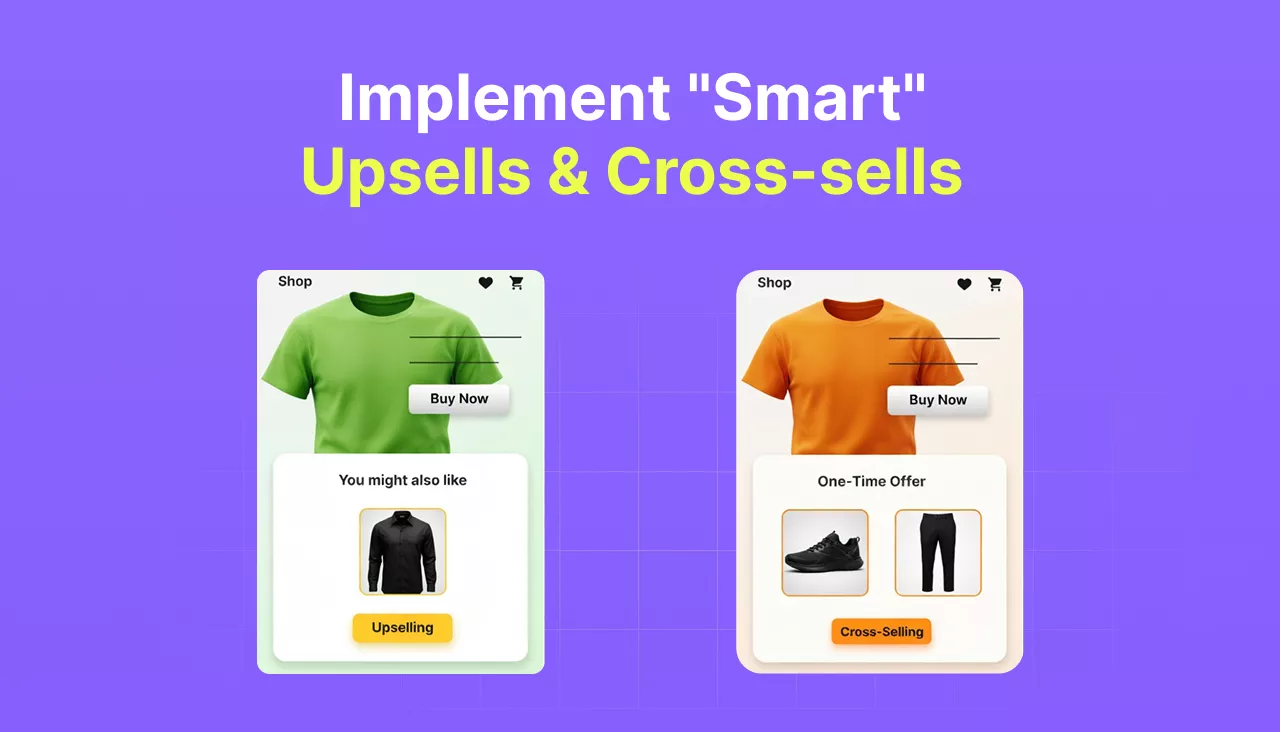
The key is “relevance.” If someone is buying a digital camera, don’t just show them a random toaster; show them a compatible memory card or a camera bag.
- Upsell: Suggesting a higher-end version of the product.
- Cross-sell: Suggesting complementary items.
10. Create a Sense of Urgency
The effects of urgency in badges such as “Low Stock” can help you boost conversions by as much as 55%.
Humans are wired to avoid missing out. If a customer thinks a product will be available forever, they might wait. If they know there are only “3 items left in stock,” they are much more likely to act now.
Here are some more practical tips commonly used in eCommerce and marketing:
- Use Limited-Time Offers: Offer discounts or deals that expire within a specific time. Example: “20% Off – Today Only” or “Sale Ends in 24 Hours.”
- Add Countdown Timers: Countdown timers visually show that time is running out, which can push visitors to complete their purchase faster.
- Highlight Limited Stock: Let customers know when inventory is low. For example: “Only 5 items left in stock.”
- Use Flash Sales: Run short promotional campaigns that last only a few hours or a day to motivate quick buying decisions.
- Show Real-Time Activity: Display messages like: “12 people are viewing this product right now.” or “Someone just purchased this item.”
- Offer Limited Bonuses: Provide extra benefits that expire soon. Like “Free shipping for the next 2 hours.”
- Use Urgency-Focused Copy: Words like “Now,” “Last Chance,” “Hurry,” “Limited Time,” or “Ends Soon” can increase urgency in CTAs and banners.
- Create Seasonal or Event-Based Promotions: Tie urgency to events such as holiday sales, product launches, or special campaigns.
11. Increase Average Order Value (AOV)
Growing eCommerce revenue doesn’t always require more customers. Another effective approach is increasing the amount each existing customer spends.
When Average Order Value (AOV) increases, overall revenue grows even if traffic stays the same.
Ways to increase the average order value that eCommerce stores use
- Product bundles
- Upsell offers
- Cross-selling related items
- Free shipping thresholds
- Volume discounts
For example, offering free shipping on orders above a certain value encourages customers to add more items to their carts.
Many successful eCommerce brands rely heavily on AOV strategies because they improve revenue without increasing marketing costs.
12. Use Email Marketing to Bring Back Visitors
Many eCommerce visitors do not buy during their first visit. That’s why capturing customer emails is extremely valuable.
Email marketing allows you to maintain communication with potential buyers and bring them back to your store.

Effective eCommerce email campaigns include
- Welcome email sequences
- Abandoned cart reminders
- Product recommendations
- Seasonal promotions
- Loyalty rewards
- Restock notifications
Returning customers often convert faster because they are already familiar with your brand. Over time, email marketing helps build long-term relationships that lead to repeat purchases.
13. Improve Product Discovery and Navigation
Customers cannot buy products they cannot find.
If your store has poor navigation, confusing categories, or weak search functionality, visitors may leave without discovering the products they want.
Improving product discovery makes browsing easier and increases the likelihood of purchases.
Ways to improve eCommerce navigation
- Clear product categories
- Advanced filtering options
- Smart search functionality
- Related product recommendations
- Popular product sections
A well-structured store allows visitors to quickly move from discovery to purchase.
14. Use Data to Guide Conversion Optimization
Many eCommerce stores make decisions based on assumptions instead of data.
Whereas tracking user behavior allows you to understand how customers interact with your store and where problems occur.
Important eCommerce metrics to monitor
- Conversion rate
- Cart abandonment rate
- Average order value
- Customer acquisition cost
- Traffic sources
- Product performance
Analyzing these metrics helps identify bottlenecks in the customer journey.
For example, if many users leave during checkout, it may indicate problems with payment options or shipping costs. Fixing or improving these issues can immediately improve conversions.
15. Focus on Customer Experience and Retention
Customer acquisition is important, but long-term eCommerce growth comes from repeat customers.
Shoppers who have already purchased from your store are more likely to buy again if they had a positive experience.
Improving customer experience should include
- Fast customer support
- Transparent return policies
- Reliable shipping and delivery
- Personalized product recommendations
- Loyalty rewards or membership programs
Retention strategies often produce higher returns than constantly chasing new customers.
When customers trust your brand and enjoy the shopping experience, they return repeatedly and recommend your store to others.
Final Thoughts
Learning how to increase eCommerce sales requires more than simply driving traffic to your store.
Successful eCommerce businesses focus on improving every stage of the customer journey, from discovery and browsing to checkout and post-purchase engagement.
You don’t need to implement everything at once. Start by identifying the biggest friction points in your store today and improving them step by step.
Over time, these improvements compound and help you increase eCommerce sales, improve conversion rates, and build a sustainable online business.
Frequently Asked Questions (FAQs)
1. How can I increase eCommerce sales?
You can increase eCommerce sales by improving website speed, optimizing product pages, simplifying checkout, and using marketing strategies like SEO, email marketing, and affiliate marketing. Focusing on conversion rate optimization and customer experience can significantly boost online sales.
2. What is a good eCommerce conversion rate?
A typical eCommerce conversion rate ranges between 2% and 4%. However, this varies by industry, product type, and traffic source. Improving site speed, trust signals, and checkout flow can help increase conversion rates.
3. Why do customers abandon their shopping carts?
Customers usually abandon carts due to unexpected shipping costs, complicated checkout processes, slow websites, or a lack of payment options. Making checkout simple and transparent can help reduce cart abandonment.
4. What are the best eCommerce marketing strategies?
Some of the most effective eCommerce marketing strategies include SEO, email marketing, social media promotion, paid advertising, and affiliate marketing. These methods help attract targeted visitors and increase conversions.
5. How can I increase the average order value in eCommerce?
You can increase average order value by offering product bundles, upsells, cross-sells, and free shipping thresholds. Encouraging customers to add complementary products to their cart can increase revenue per order.
Subscribe to Our Newsletter
Get the latest WordPress tutorials, trends, and resources right in your inbox. No Spamming, Unsubscribe Anytime.

Thank you for subscribing to our newsletter!

Growth Marketer with expertise in SEO, content marketing, product-led growth, and community-driven acquisition. Experienced in scaling WordPress products through organic search, strategic content, Reddit marketing, and user-focused growth initiatives. Passionate about turning customer insights into sustainable growth, stronger brand visibility, and measurable business results.
Table of Content
- Key Factors That Influence Your Ecommerce Sales
- 15 Proven Strategies to Increase Ecommerce Sales
- 1. Improve Store Speed and Performance
- 2. Simplify Your Store’s Checkout Experience
- 3. Optimize Product Pages for Decision Making
- 4. Master the "Safety Net" of Cart Recovery
- 5. Build Trust Through Reviews and Social Proof
- 6. Launch a Professional Affiliate Marketing Program
- 7. Improve Mobile Shopping Experience
- 8. Offer Flexible "Buy Now, Pay Later" Options
- 9. Implement "Smart" Upsells and Cross-sells
- 10. Create a Sense of Urgency
- 11. Increase Average Order Value (AOV)
- 12. Use Email Marketing to Bring Back Visitors
- 13. Improve Product Discovery and Navigation
- 14. Use Data to Guide Conversion Optimization
- 15. Focus on Customer Experience and Retention
- Final Thoughts
- Frequently Asked Questions (FAQs)
- 1. How can I increase eCommerce sales?
- 2. What is a good eCommerce conversion rate?
- 3. Why do customers abandon their shopping carts?
- 4. What are the best eCommerce marketing strategies?
- 5. How can I increase the average order value in eCommerce?